Overview
Traffic signs and their meaning
The most important Dutch traffic signs in one place. Look at the shape and colour, and you'll usually know what a sign means.
Prohibition signs
Round with a red ring. They tell you what's not allowed.
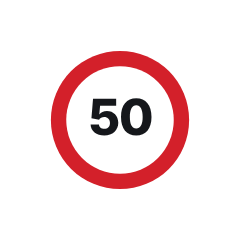
Speed limit
You may not drive faster than the speed on the sign. Here that's 50 km/h.
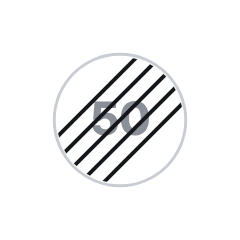
End of speed limit
The speed limit shown ends here. After this, the general speed limit for that road applies again.
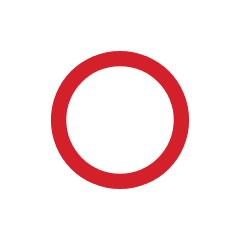
Closed to all vehicles
Closed to all vehicles in both directions. Pedestrians may pass.
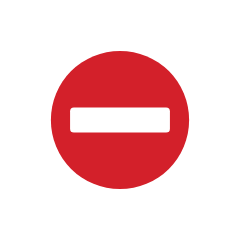
No entry
You may not enter the road in this direction. You often see this sign at the end of a one-way street.
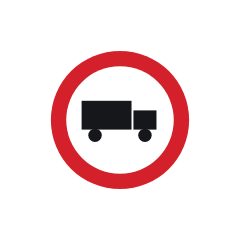
Closed to lorries
Lorries may not enter here. With a car you're allowed in.
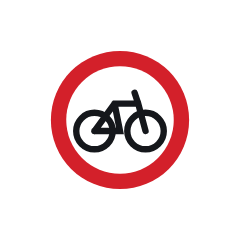
Closed to cyclists
Cyclists may not use this road.
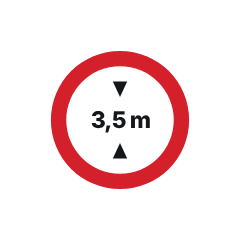
Maximum height
Vehicles taller than the height shown may not pass here, load included.
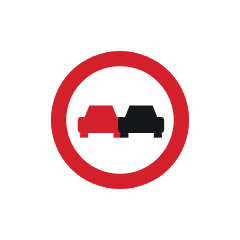
No overtaking
You may not overtake motor vehicles with more than two wheels here. Overtaking a motorbike, moped or cyclist is allowed, if it's safe.
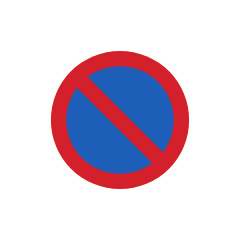
No parking
You may not park here. Stopping briefly to let someone get in or out, or to load, is allowed.
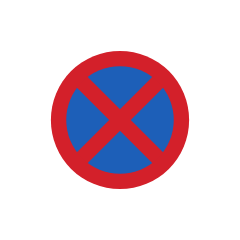
No stopping
You may not stop here, not even briefly to let someone out.
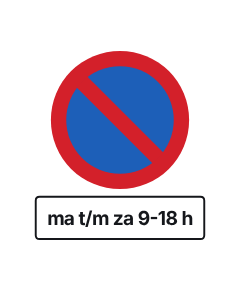
No parking with additional sign
The ban only applies on the days and times on the sub-sign. Outside those, you may park.
Mandatory signs
Round and blue. They tell you what you must do.
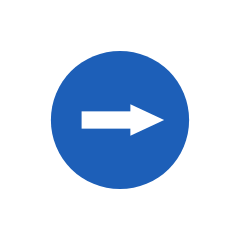
Mandatory direction
You must follow the direction of the arrow. A round blue sign is always a mandatory instruction.
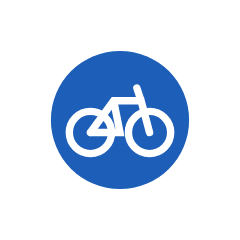
Mandatory cycle path
Cyclists must use this cycle path. You're not allowed on it by car.
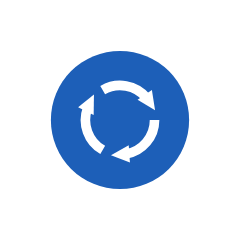
Roundabout
You're approaching a roundabout and drive around it anticlockwise. If there are shark's teeth too, traffic on the roundabout has right of way.
Priority signs
They decide who goes first at a crossroads.
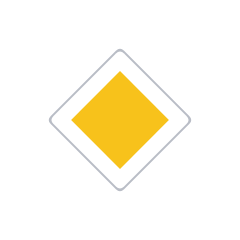
Priority road
You're driving on a priority road. You have right of way at junctions along this road.
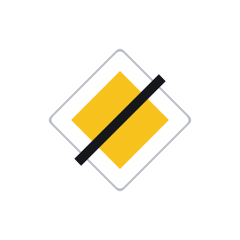
End of priority road
The priority road ends here. At the next junction, follow the normal rules and signs again.
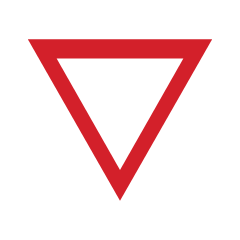
Give way
You must give way to traffic on the crossing road. There are often shark's teeth markings too.
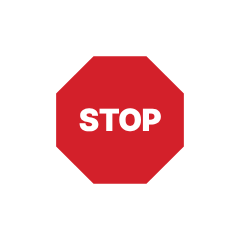
Stop sign
You must always come to a complete stop and then give way to traffic on the crossing road.
Warning signs
A triangle pointing up. They warn of danger ahead.
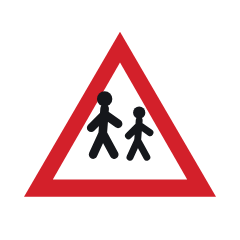
Children crossing
Watch out for children, for example near a school or playground. Drive extra carefully.
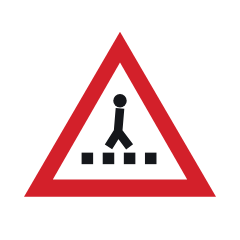
Pedestrian crossing
You're approaching a zebra crossing. Let pedestrians on or near the zebra crossing go first.
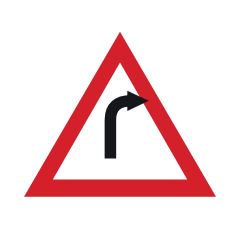
Dangerous bend
A dangerous bend to the right is coming. Adjust your speed in time, before the bend.
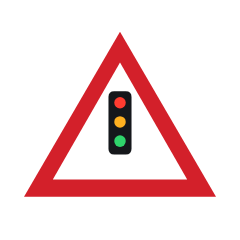
Traffic lights
You're approaching traffic lights you may not be able to see yet. Be ready to stop.
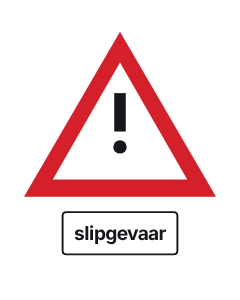
Danger
General danger. The sign below tells you which danger, such as a slippery road or roadworks.
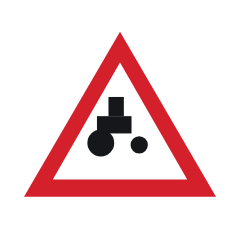
Agricultural traffic
Watch out for slow agricultural vehicles that may pull onto the road.
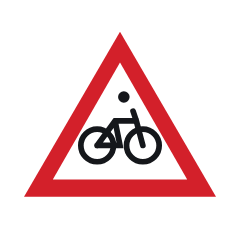
Cyclists
Watch out for cyclists and moped riders crossing or merging.
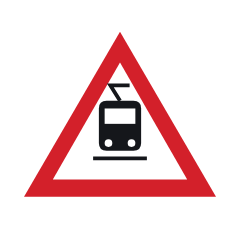
Tram
Watch out, a tram runs here. At an uncontrolled junction the tram always has right of way.
Information signs
Usually rectangular and blue. They give information about the road or the area.
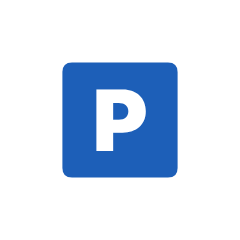
Parking area
You may park here. A sign below can show for whom or when.
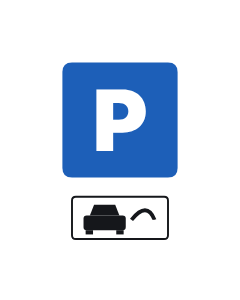
Parking for charging
This parking space is only for charging an electric vehicle.
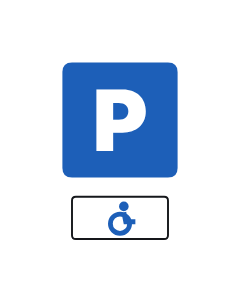
Disabled parking space
Parking only with a valid disabled parking card.
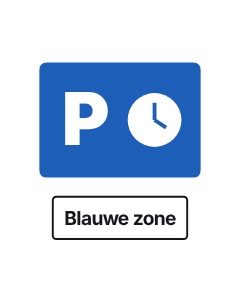
Blue zone
You may park here with a parking disc, for as long as indicated on site.
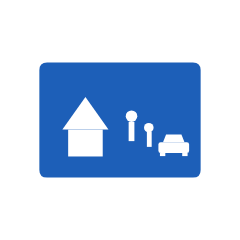
Residential zone
Start of a residential zone (woonerf). You drive at walking pace and pedestrians may use the whole road.
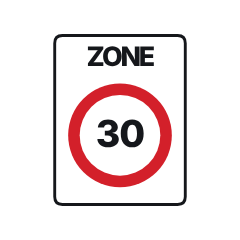
Zone 30
Start of an area where the limit is 30 km/h, until the end-of-zone sign.

Start of built-up area
Blue place-name sign: this is where the built-up area begins. Without other signs, the limit is 50 km/h.
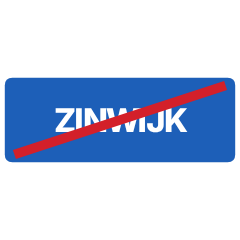
End of built-up area
Place name sign with a red line: this is where the built-up area ends.
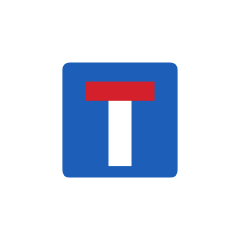
Dead end
This is a dead end. You can't drive through.
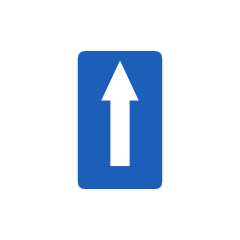
One-way street
You may only enter this road in the direction of the arrow.
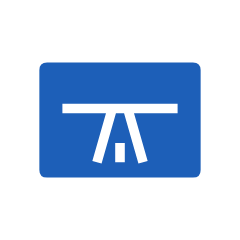
Motorway
Start of the motorway. Only motor vehicles that can and may drive at least 60 km/h.
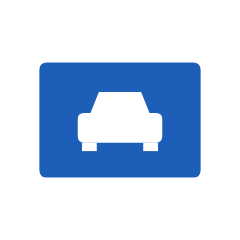
Expressway
Start of an expressway. Without other signs, the limit here is 100 km/h.
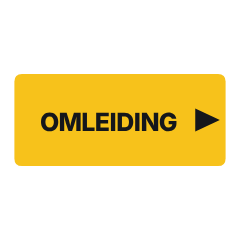
Diversion
Yellow sign: a temporary diversion route, for example during roadworks.
Test yourself: traffic signs
Free, no account needed. With an explanation for every answer.
Frequently asked questions about traffic signs
What does a round sign with a red border mean?
A round sign with a red border is a prohibitory sign. The symbol or number shows what's prohibited.
What does a round blue sign mean?
A round blue sign is a mandatory sign. You must do what the sign shows, such as following a direction.
What does a triangular sign mean?
Pointing up, it's a warning of danger. Pointing down, you must give way.
What does a diagonal line through a sign mean?
Diagonal lines through a sign usually mark the end of a ban or mandatory instruction.